There are moments in life when we wonder whether one person can truly make a difference. Many women know the feeling of wanting to improve the world around them while balancing careers, family responsibilities, and personal dreams. It is easy to believe that meaningful change is reserved for people with extraordinary influence or endless resources. Yet history tells a different story.
Wangari Maathai reminds us that lasting change often begins with one determined woman taking a single step. Her story is not only about protecting forests or planting trees. It is about courage, resilience, and believing that caring for nature also means caring for people. Her life continues to inspire women around the world to speak up, take action, and trust that even small efforts can grow into something remarkable.
Wangari Maathai’s Life at a Glance
- 1940 – Born on April 1, 1940, in Nyeri District, Kenya.
- 1960 – Received a scholarship to study in the United States as part of the Kennedy Airlift program.
- 1964 – Earned a Bachelor’s degree in Biological Sciences from Mount St. Scholastica College (now Benedictine College), Kansas.
- 1966 – Completed a Master’s degree in Biological Sciences at the University of Pittsburgh.
- 1971 – Became the first woman in East and Central Africa to earn a PhD, graduating from the University of Nairobi.
- 1977 – Founded the Green Belt Movement, promoting tree planting, environmental conservation, and women’s empowerment.
- 1980s and 1990s – Led campaigns against deforestation, corruption, and the destruction of public parks, often facing arrest and political persecution.
- 2002 – Elected to the Kenyan Parliament after years of pro democracy activism.
- 2003 – Appointed Assistant Minister for Environment, Natural Resources and Wildlife in Kenya.
- 2004 – Awarded the Nobel Peace Prize, becoming the first African woman to receive the honor.
- 2006 – Published her memoir, Unbowed, sharing her personal journey and activism.
- 2011 – Passed away on September 25, 2011, in Nairobi, Kenya, after battling ovarian cancer.
- Legacy – The Green Belt Movement has helped plant more than 50 million trees, and Wangari Maathai remains a global symbol of environmental activism, ecology, women’s empowerment, and sustainable development.
Who Was Wangari Maathai
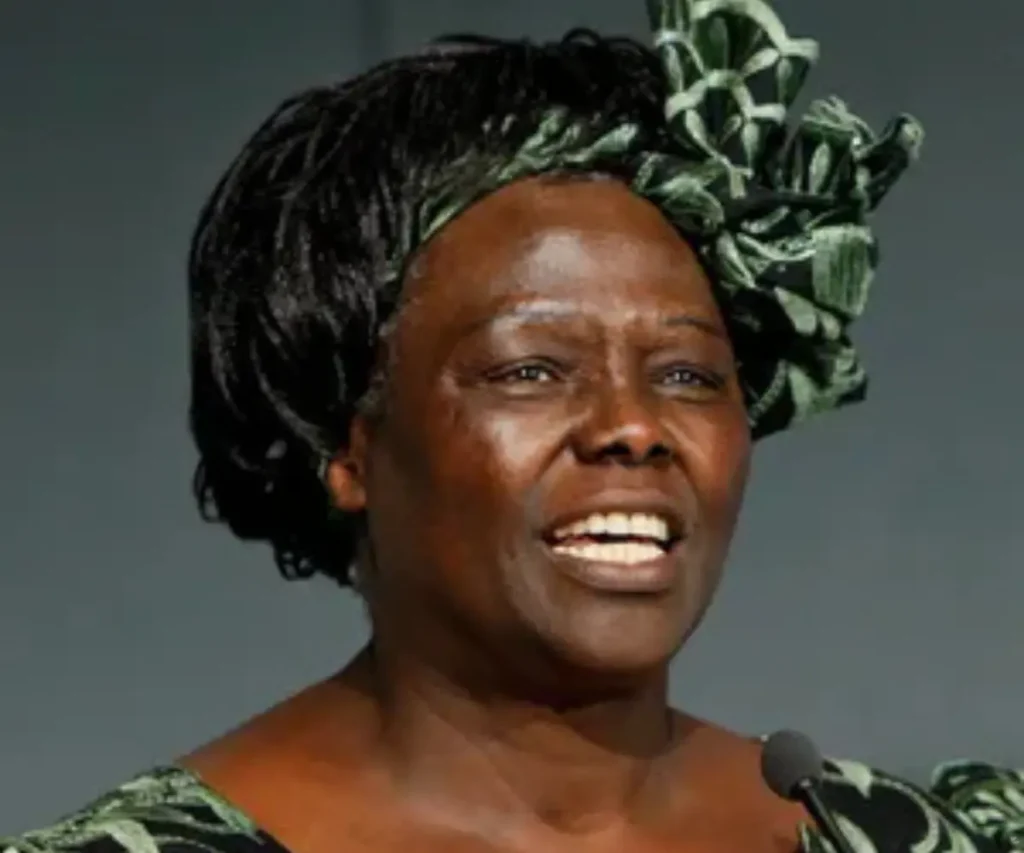
Wangari Maathai was a Kenyan environmental activist, scholar, and political leader whose work transformed both communities and landscapes. Born in 1940 in rural Kenya, she grew up surrounded by rich forests and fertile land. As environmental destruction increased, she witnessed its impact on families, especially women who depended on natural resources for food, water, and firewood.
She understood that ecology was about much more than protecting wildlife. It was closely connected to poverty, health, equality, and human dignity. This perspective made her one of the most influential voices in environmental activism. In 2004, she became the first African woman to receive the Nobel Peace Prize for linking environmental protection with peace, democracy, and sustainable development.
The Green Belt Movement Began With One Simple Idea
In 1977, Wangari Maathai founded the Green Belt Movement, encouraging women to plant trees in their local communities. What appeared to be a simple environmental initiative soon became a powerful force for social change.
The movement helped communities by:
- restoring forests damaged by deforestation
- improving soil quality and protecting water sources
- creating income opportunities for women
- strengthening local communities through shared action
Over the years, the initiative has led to the planting of tens of millions of trees across Kenya while inspiring environmental projects around the world.
Readers interested in learning more can visit the Green Belt Movement.
Why Her Activism Changed More Than the Environment
Many people remember Wangari Maathai as an environmental activist, but her work reached far beyond ecology. She believed that healthy ecosystems supported healthy societies. When forests disappeared, communities faced greater poverty, food insecurity, and conflict.
She openly challenged corruption and opposed decisions that threatened public land and natural resources. Her determination often came with personal risks, including harassment and imprisonment. Even so, she refused to abandon her mission.
For women today, her story offers an important reminder that standing up for meaningful values may not always be comfortable, but lasting change often begins with people who choose courage over silence.
Lessons Every Woman Can Take From Wangari Maathai
Although her achievements were extraordinary, many of the principles she lived by are surprisingly practical.
Her example encourages women to:
- believe that small actions matter
- support other women instead of competing with them
- stay patient when progress feels slow
- protect both people and the environment
- speak up for causes they genuinely believe in
Perhaps her greatest lesson is that leadership is not about having the loudest voice. It is about inspiring others to take positive action alongside you.
A Legacy That Still Inspires the World
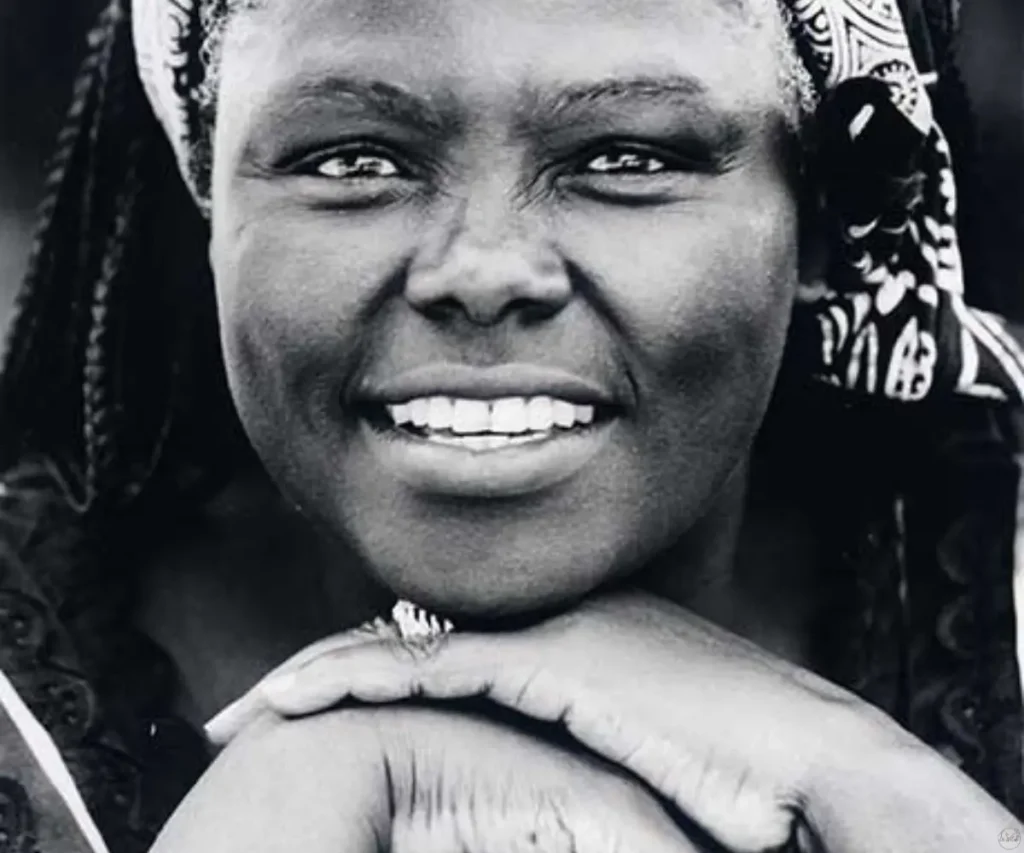
Receiving the Nobel Prize brought international recognition, but Wangari Maathai never lost sight of the communities she served. Her ideas continue to influence conversations about climate change, sustainability, and women’s empowerment.
Today, her work remains especially relevant as environmental challenges become increasingly urgent. Her story demonstrates that ecology, human rights, and equality are deeply connected.
You can read the United Nations Environment Programme article about her lasting environmental legacy here.
How Her Story Can Inspire Your Own Journey
Very few people will found a global movement or receive a Nobel Prize, but everyone has the ability to create positive change in everyday life. Supporting local environmental projects, reducing waste, planting a tree, mentoring another woman, or simply becoming more aware of our impact on nature all contribute to a better future.
Wangari Maathai believed that hope grows through action. Every thoughtful decision creates a ripple effect that reaches further than we can imagine. Her story reminds us that we do not need perfect circumstances to make a difference. We simply need the willingness to begin.
A Life That Continues to Inspire
Wangari Maathai’s life shows that courage, compassion, and persistence can transform communities and inspire generations. As an activist, Nobel Prize laureate, and cha
mpion of ecology, she proved that caring for the environment is also an act of caring for people.
Take a moment to reflect on one positive action you could take this week, whether it is supporting a local environmental initiative, learning more about sustainable living, or sharing Wangari Maathai’s story with someone who needs inspiration. Small actions, repeated consistently, truly have the power to change the world.
Bc. Michaela Šmírová
*Zdroje obrázků:
https://www.britannica.com/biography/Wangari-Maathai