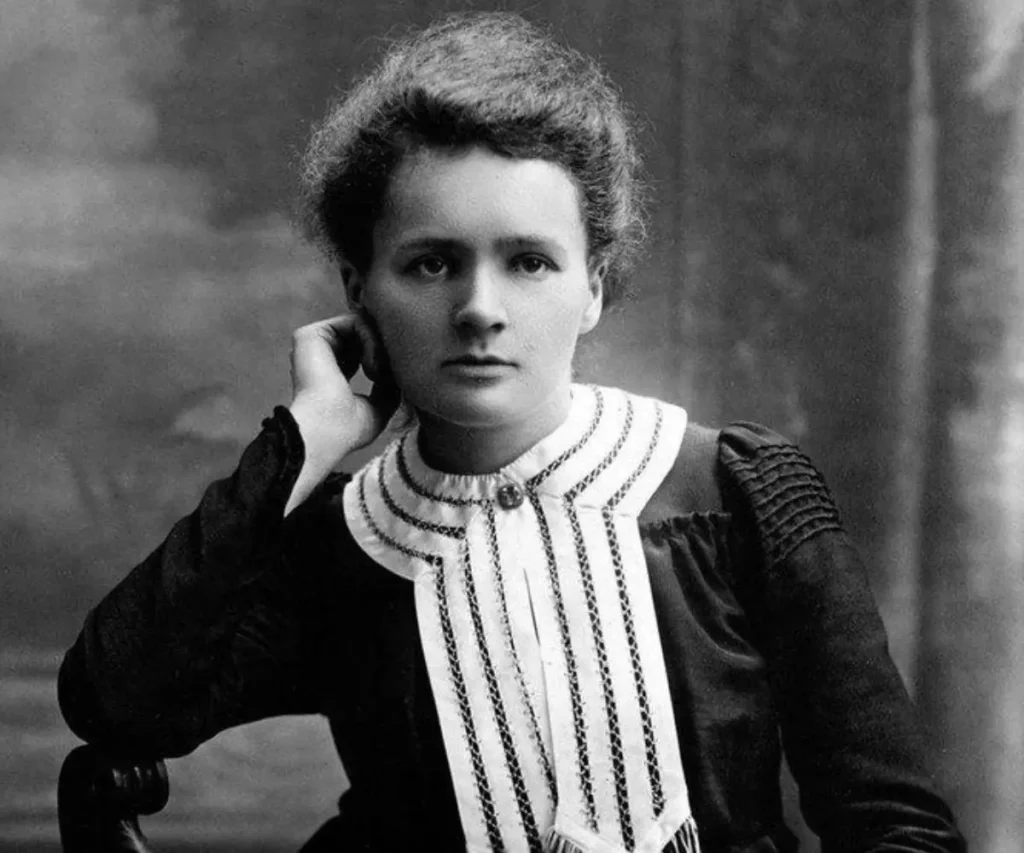

There are moments in life when you question whether your work truly matters. Maybe you are building a career, balancing relationships, or trying to carve out space for your own ambitions. In those moments, it helps to remember women who kept going anyway, even when the world did not expect them to. One of those women is Marie Curie, a name many of us learned in school, but whose story carries a deeper, more personal kind of inspiration.
Her journey is not just about science. It is about persistence, identity, and the quiet courage to follow your curiosity even when no one is watching.
Marie Curie’s Life at a Glance
- 1867 – Born on November 7 in Warsaw, Poland
- 1891 – Moved to Paris to study at the Sorbonne (University of Paris)
- 1895 – Married Pierre Curie
- 1898 – Discovered two new elements, polonium and radium
- 1903 – Awarded the Nobel Prize in Physics (first woman ever to receive it)
- 1906 – Became the first female professor at the University of Paris after Pierre Curie’s death
- 1911 – Won a second Nobel Prize, this time in Chemistry
- 1914–1918 – Developed mobile X-ray units during World War I to help treat wounded soldiers
- 1934 – Died on July 4 due to illness caused by long-term radiation exposure
A Woman Who Refused to Stay Small
Born in Warsaw at a time when women were denied higher education, Marie Curie did not have a straightforward path. She worked as a governess to support her sister’s studies before eventually moving to Paris to attend the Sorbonne. Imagine starting over in a new city, in a new language, with limited resources and enormous expectations.
For many women today, that feeling is familiar. Whether it is switching careers, going back to school, or stepping into leadership, the fear of not belonging can feel overwhelming. Curie faced that same uncertainty, yet she leaned into it.
The First Woman to Win a Nobel Prize
In 1903, Curie made history by becoming the first woman to receive the Nobel Prize. She shared the honor in physics with her husband Pierre Curie and Henri Becquerel for their work on radiation.
What makes this moment truly powerful can be summed up simply:
- She succeeded in a field dominated by men
- She did not wait for recognition to begin her work
- She continued despite limited opportunities and support
- She later earned a second Nobel Prize in a different field
This is not just a milestone in science. It is a reminder that women are capable of redefining limits that society quietly places on them.
The Discovery That Changed Science Forever
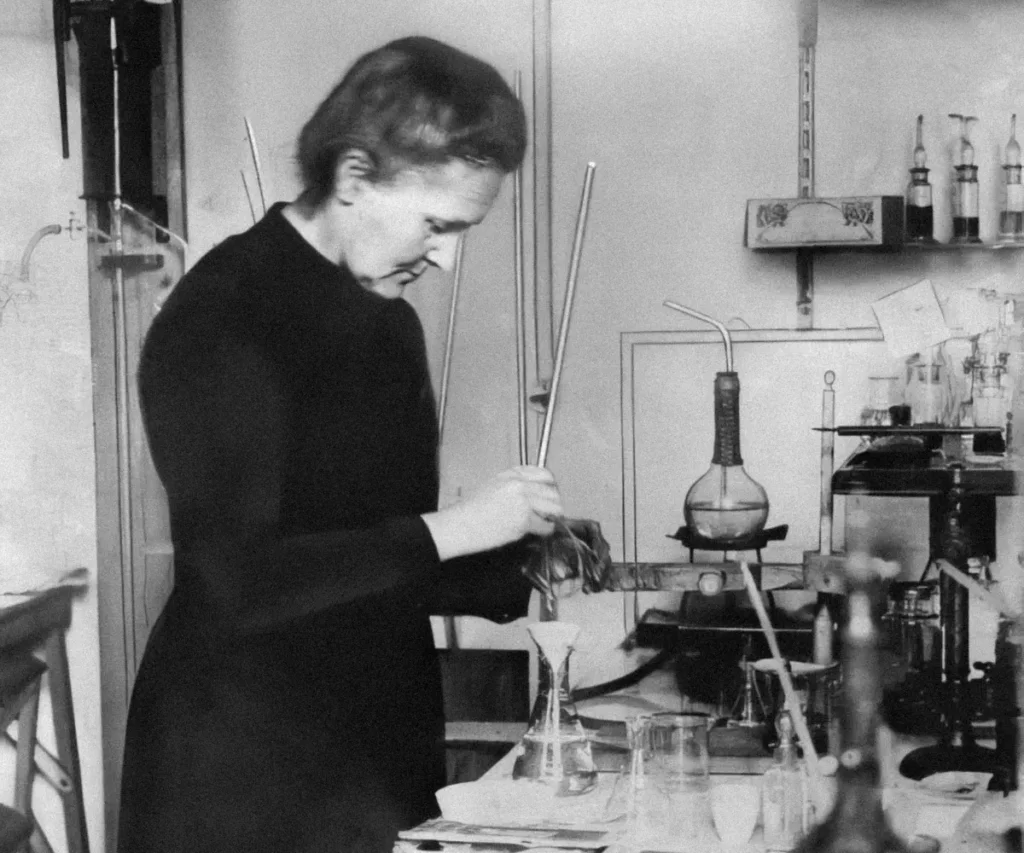
Curie’s most groundbreaking contribution was her research into radioactivity, a term she coined herself. Her work led to the discovery of two new elements, polonium and radium, and opened entirely new paths in physics and medicine.
Her discovery reshaped the world in ways that still impact us today:
- It transformed how scientists understand the atom
- It laid the foundation for modern physics research
- It enabled life-saving cancer treatments through radiation therapy
- It expanded opportunities for future scientists, especially women
If you pause for a moment, it is incredible to think that one woman’s curiosity reshaped an entire field.
For a deeper look into her scientific legacy, you can explore this resource from the Nobel Prize Organization.
Balancing Passion, Loss, and Responsibility
Curie’s life was not without hardship. After the sudden death of her husband, she was left to continue their work while raising two daughters. She stepped into his academic position, becoming the first female professor at the University of Paris.
Many women know what it feels like to carry both personal and professional responsibilities at once. Curie did not wait for life to feel perfect before pursuing what mattered.
Why Her Story Still Matters Today
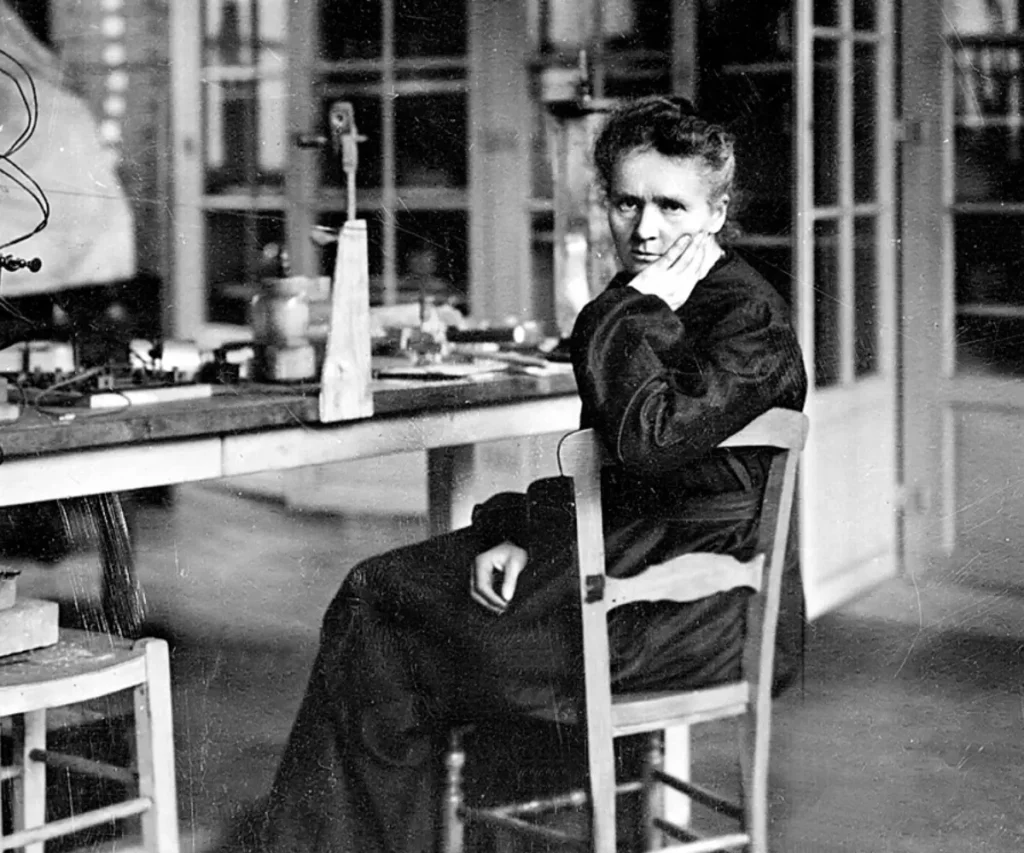
It is easy to think of historical figures as distant or untouchable, but Curie’s journey feels surprisingly modern. She navigated career ambition, financial struggle, societal expectations, and personal loss.
For women, especially those focused on career growth and personal development, her story offers a grounded kind of motivation. Not the loud, overnight success narrative we often see, but something steadier and more sustainable.
Lessons You Can Carry Into Your Own Life
Curie’s legacy is not just about scientific achievement. It is about mindset.
Trust your curiosity
The things that interest you are not random. They are clues pointing toward your strengths.
Progress does not need to be loud
Consistent effort, even when unseen, builds something meaningful.
You are allowed to take up space
Your voice matters in your career, relationships, and ambitions.
Resilience can look quiet
Strength is often found in simply continuing forward.
A Legacy That Lives Beyond Science
Marie Curie did not set out to become a symbol of empowerment. She simply followed her work with honesty and dedication. Yet, her impact extends far beyond laboratories and textbooks.
She represents what is possible when women choose not to shrink themselves.
Conclusion
Marie Curie’s story is a powerful blend of intellect, resilience, and quiet determination. She became the first woman to win a Nobel Prize, made a groundbreaking discovery in science, and reshaped how we understand the world.
As you move through your own journey, take a moment to reflect. Where are you holding back? What are you curious about but hesitant to explore?
Start there. Small steps, taken consistently, can lead to discoveries of your own.
Bc. Michaela Šmírova
*Zdroje obrázků:
https://www.novinky.cz/clanek/veda-skoly-madame-curie-usmrtil-prvek-ktery-objevila-40058806
https://mairiepariscentre.paris.fr/pages/balade-dans-le-paris-savant-de-marie-curie-15487