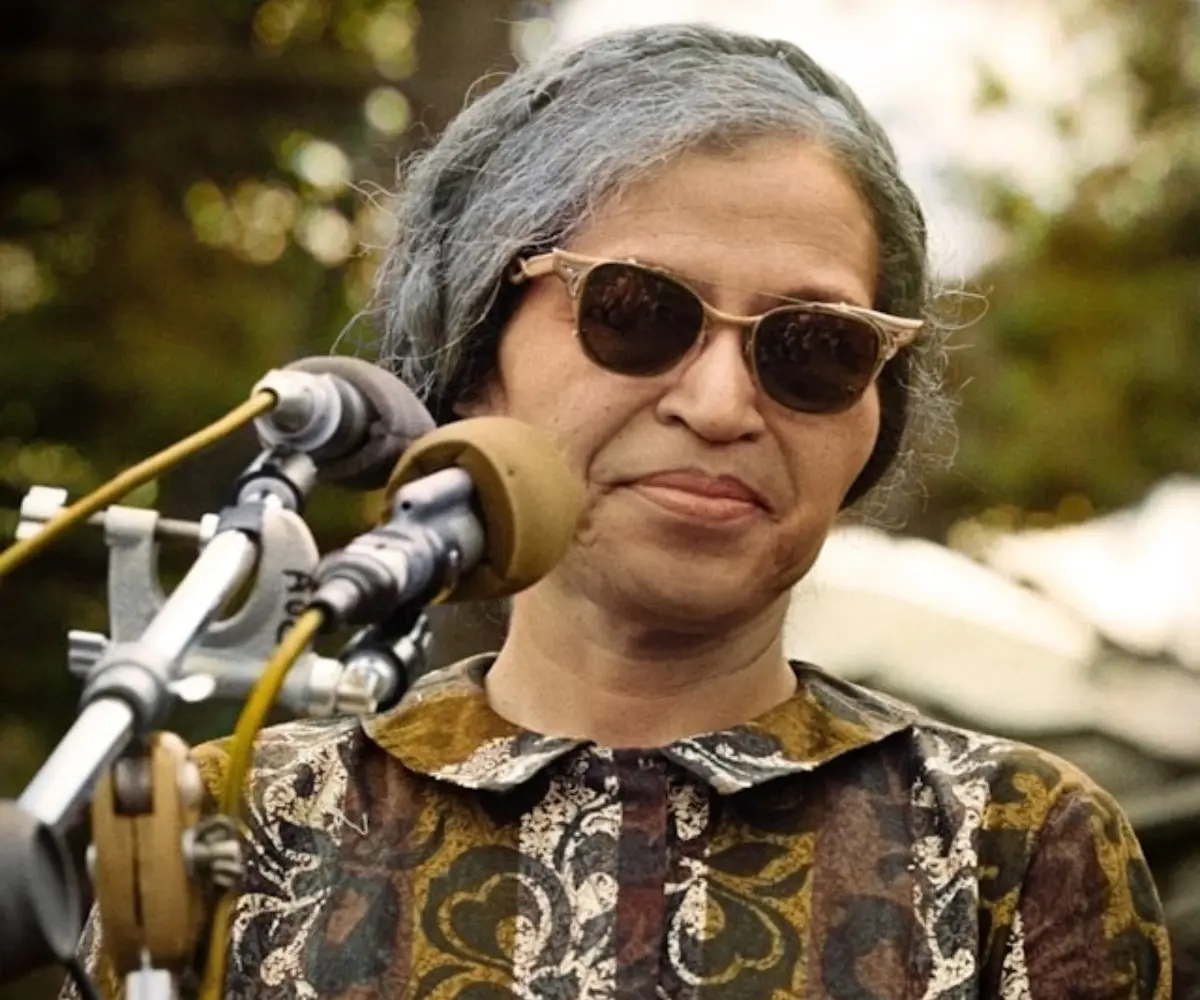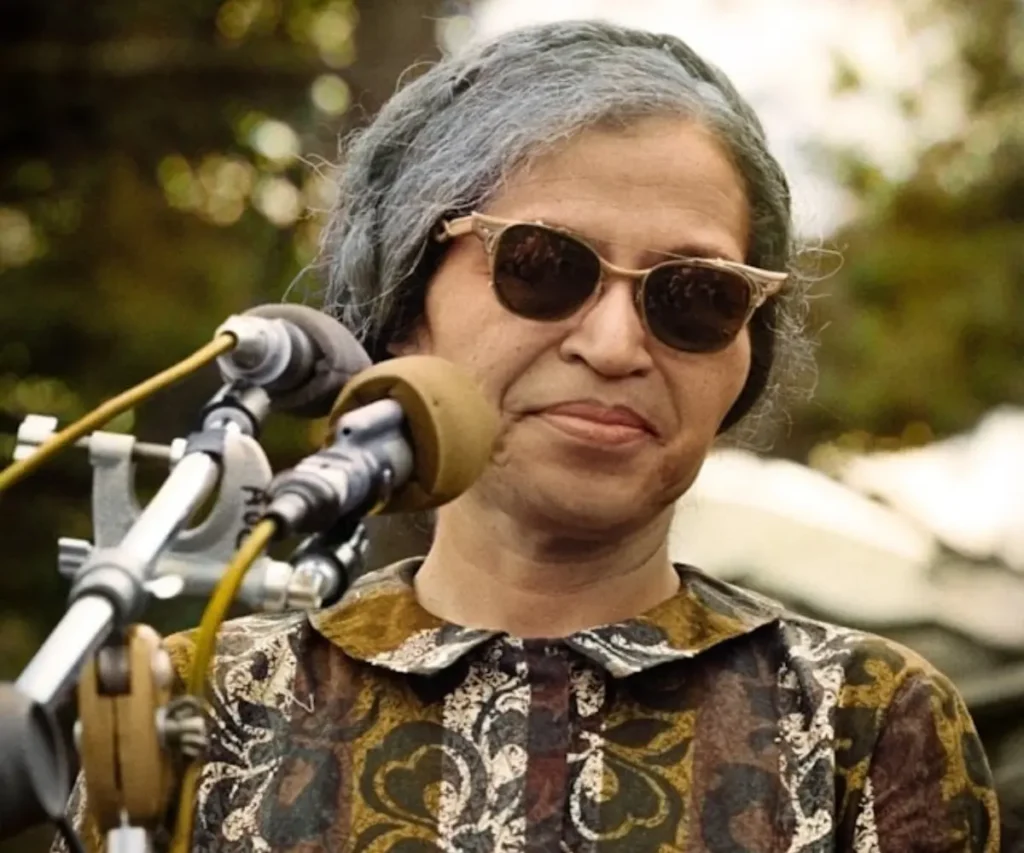

There are moments in life when staying quiet feels easier. Maybe it is the meeting where you almost speak up, the relationship where you keep compromising, or the workplace where you accept being overlooked because challenging the situation feels exhausting.
Rosa Parks understood the weight of that decision.
On December 1, 1955, Parks was riding a bus home from work in Montgomery, Alabama, when the driver ordered her to give up her seat to a white passenger. She refused. Her arrest helped spark the Montgomery Bus Boycott, a pivotal event in the American civil rights movement that changed American history.
Rosa Parks’ Life at a Glance
- 1913: Rosa Louise McCauley was born on February 4, 1913, in Tuskegee, Alabama.
- 1932: She married Raymond Parks, a barber and civil rights activist.
- 1943: Parks joined the NAACP’s Montgomery chapter and later became its secretary, becoming increasingly involved in the fight for racial justice.
- 1955: On December 1, Parks refused to give up her seat to a white passenger on a segregated bus in Montgomery, Alabama. She was arrested, an event that helped spark the Montgomery Bus Boycott.
- 1955 to 1956: The Montgomery Bus Boycott lasted more than a year and became a major turning point in the American civil rights movement.
- 1957: Parks and her husband moved to Detroit, Michigan, where she continued her activism.
- 1965: She began working in the office of Congressman John Conyers, supporting civil rights and community causes.
- 1987: Parks and her friend Raymond Parks established the Rosa and Raymond Parks Institute for Self Development, focused on educating young people about civil rights and social justice.
- 1996: President Bill Clinton awarded Parks the Presidential Medal of Freedom, one of the highest civilian honors in the United States.
- 1999: She received the Congressional Gold Medal for her contribution to American history and the civil rights movement.
- 2005: Rosa Parks died on October 24, 2005, in Detroit at the age of 92.
Rosa Parks Was More Than a Moment in History
The familiar story sometimes presents Rosa Parks as a tired seamstress who spontaneously decided she had had enough. The reality is far more powerful.
Parks had become secretary of the Montgomery branch of the NAACP in 1943. She worked on voter registration and investigated cases involving racial violence and discrimination. Her decision on the bus was part of a much longer commitment to equality.
That distinction matters because courage rarely appears from nowhere. It often grows quietly through years of learning, observing, questioning and deciding what we will no longer accept.
For women, this is an important lesson. Strength does not always look dramatic. Sometimes it looks like preparation, patience and knowing exactly where your values stand.
The Day One Woman Changed American History
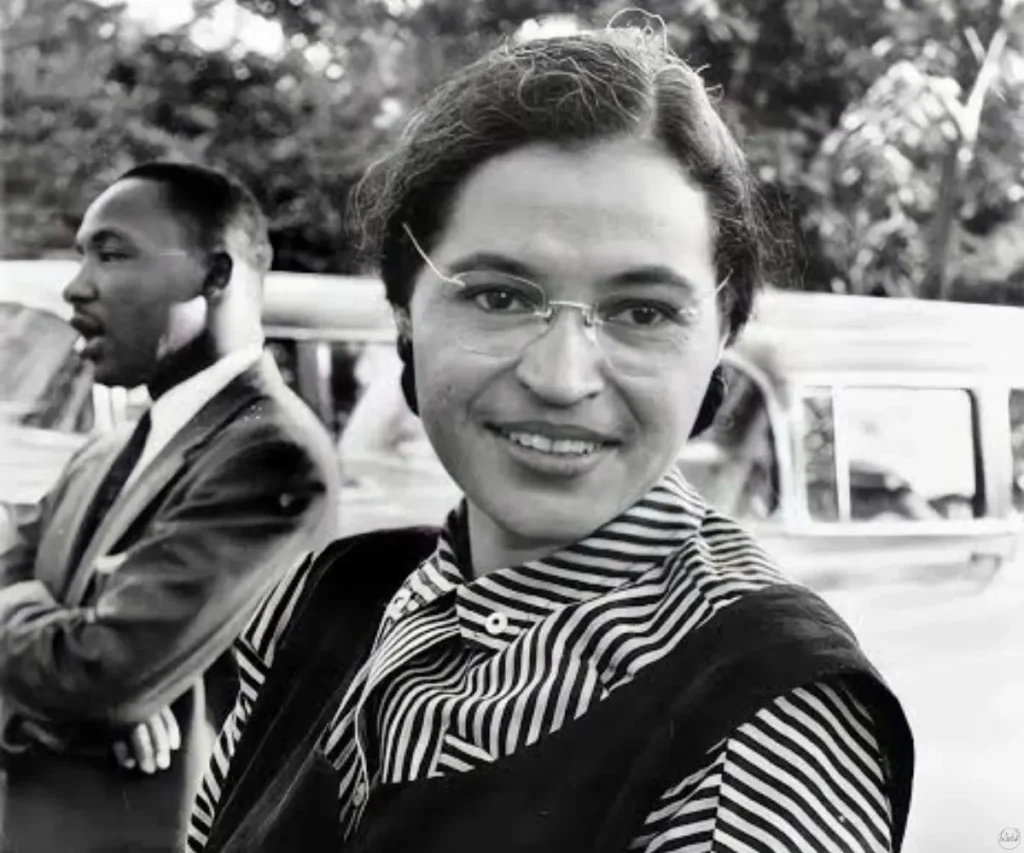
On that December evening, Parks was sitting in the first row behind the seats reserved for white passengers. When the bus became crowded, the driver demanded that she and three other Black passengers move. The others eventually gave up their seats. Parks remained where she was. Police arrested her for refusing the driver’s order.
Her arrest became a rallying point for Montgomery’s Black community. In response, the community organized a peaceful bus boycott against segregation that lasted for more than a year.
The movement depended on thousands of ordinary people who refused to accept an unfair system:
- People stopped using Montgomery’s buses.
- Many walked long distances to work and school.
- Churches and community leaders helped organize transportation.
- The boycott continued despite pressure and intimidation.
The campaign eventually contributed to the legal end of segregated seating on Montgomery buses. For further historical context, the National Archives provides an account of the Montgomery Bus Boycott, including Parks’ arrest and the community action that followed.
Her Courage Was Quiet, But It Was Not Passive
There is something especially meaningful about Rosa Parks for women today.
Her strength was not loud. She did not need a stage, a microphone or a powerful title to make an impact. She understood that there was a line she could no longer accept being crossed.
Personal growth does not always mean becoming more outspoken or visible. Sometimes it means becoming clearer about your values. It means recognizing when a situation asks you to compromise something fundamental.
Parks demonstrated that quiet determination can be powerful.
You can stay calm while standing your ground. Thoughtfulness doesn’t mean you have to say yes. Compassion can coexist with strong, healthy boundaries.
The Cost of Taking a Stand
It is easy to look at historical figures through the comfortable distance of hindsight. We know Rosa Parks became an icon. She did not know that when she refused to move.
Her decision came with serious consequences, including arrest, threats and financial hardship. Eventually, Parks and her husband moved to Detroit.
This part of her story deserves attention because meaningful courage can come with a cost.
When you face a difficult situation, consider:
- What value am I trying to protect?
- What consequences might this decision have?
- Who can support me?
- What practical step can I take next?
Courage does not mean ignoring the risks. It means understanding them and deciding what is worth standing for.
The Woman Behind the Famous Story
Parks’ famous bus protest was not the beginning of her activism.
She had already spent years working for racial justice. She continued her civil rights work after Montgomery and remained involved in efforts supporting equality and young people.
The Smithsonian Magazine article about Rosa Parks offers a deeper look at the activist behind the familiar historical image. Her personal papers reveal a determined woman who had been politically engaged long before her famous arrest.
This makes her story even more inspiring. Her courage was not a spontaneous burst of bravery. It was the result of years of conviction and action.
What Rosa Parks Can Teach Women Today
For women, Rosa Parks’ story can feel surprisingly relevant.
You may not be confronting legalized segregation, but you may still experience moments when you are expected to make yourself smaller. You may be encouraged to stay agreeable, avoid conflict or accept less than you deserve.
Parks offers a different model.
- Know your values. Before you can defend your boundaries, you need to understand what matters to you.
- Prepare before the difficult moment. Parks’ courage was strengthened by years of activism and experience.
- Do not underestimate one decision. A single conversation, boundary or act of courage can influence people in ways you cannot predict.
- Remember that progress is collective. Parks did not change American history alone. Her action became powerful because a community organized around it.
Her Legacy Still Has Something to Say
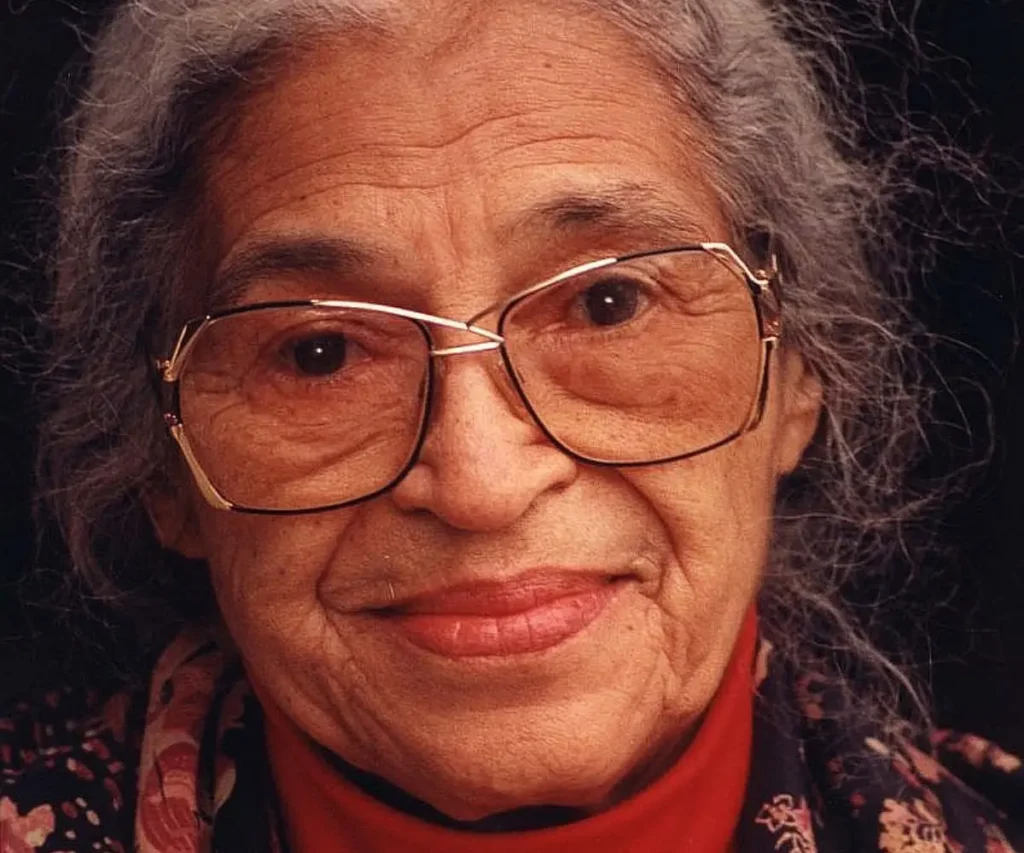
Rosa Parks died in 2005 at the age of 92, but her influence remains deeply woven into American history. Her story continues to matter because it captures something universal about courage.
You do not have to know exactly what will happen next to make a principled decision.
You do not have to be the loudest person in the room to make a difference.
And you do not have to wait until you feel completely fearless.
The next time you wonder whether your voice matters, remember Rosa Parks. Her decision began with one quiet refusal, but it became part of a movement that helped transform American civil rights.
Sometimes change begins when one person decides that enough is enough.
Bc. Michaela Šmírová
*zdroje obrázků:
https://cs.wikipedia.org/wiki/Rosa_Parksov%C3%A1
https://achievement.org/achiever/rosa-parks
https://www.craigdailypress.com/news/writers-on-the-range-rosa-parks-gives-a-talk-in-my-small-town